Math playzone is an engaging concept that brings mathematics and entertainment together to create a more enjoyable learning experience. For many students, mathematics can seem difficult because it involves numbers, formulas, calculations, and problem-solving techniques that require regular practice. However, learning does not always have to involve textbooks, lengthy assignments, or traditional classroom exercises. Interactive activities, educational games, puzzles, and challenges can make mathematical concepts easier to understand while keeping learners interested.
A math playzone provides an opportunity to explore mathematics through enjoyable activities that encourage curiosity and active participation. Instead of simply memorizing formulas, students can practice addition, subtraction, multiplication, division, geometry, fractions, and logical reasoning through different types of challenges. This approach can help learners develop confidence and recognize how mathematical skills are connected to everyday situations.
Whether used at home, in a classroom, or during independent study, math playzone represents an educational approach that combines practice with entertainment. It can support different learning styles, encourage independent thinking, and make mathematical exploration more approachable for children and beginners.
What Is Math Playzone?
Math playzone refers to an educational environment or collection of activities designed to make mathematics more interactive and enjoyable. It may include digital games, printable worksheets, number puzzles, timed challenges, quizzes, and hands-on mathematical exercises.
The central idea is simple: students learn mathematical concepts by participating in activities rather than relying exclusively on traditional instruction.
A well-organized math playzone can introduce learners to different mathematical topics according to their age, ability, and educational needs. Beginners might start with counting and number recognition, while more advanced students can explore multiplication, fractions, algebra, and problem-solving challenges.
An Interactive Approach to Mathematics
Traditional mathematics lessons often focus on explaining concepts and completing written exercises. Although these methods remain important, interactive learning can provide another way to understand difficult subjects.
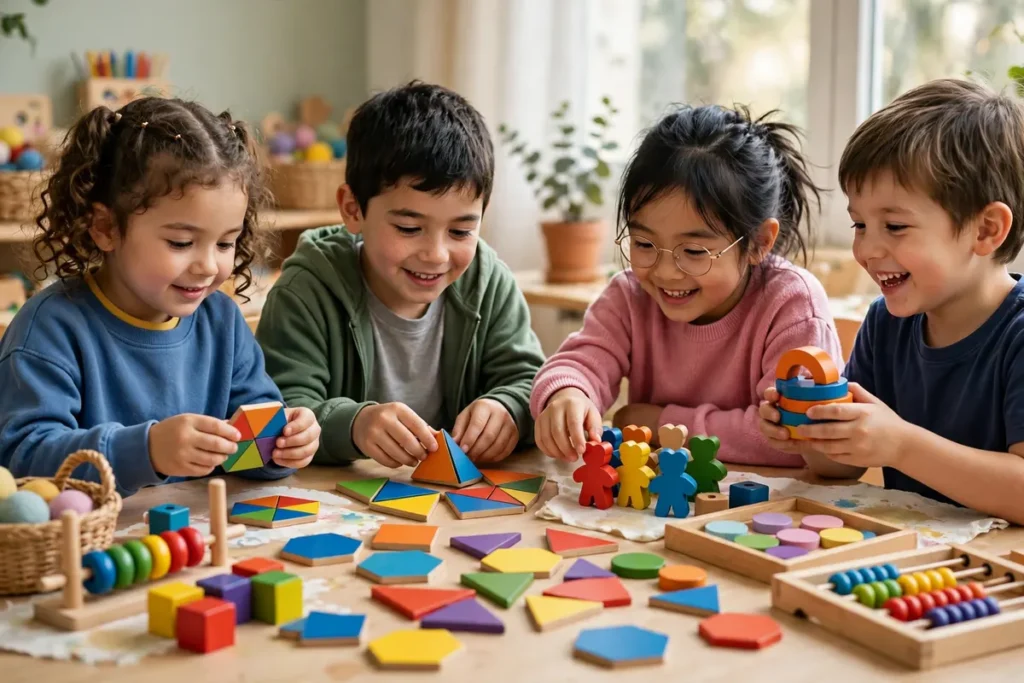
For example, a student learning multiplication might participate in a matching game where multiplication questions must be connected to their correct answers. Another learner might practice geometry by identifying shapes in an interactive puzzle.
These activities encourage students to participate actively. They can experiment with different solutions, recognize mistakes, and improve their understanding through repetition.
Learning Through Entertainment
Entertainment can make educational activities feel less intimidating. When students enjoy an activity, they may become more willing to spend time practicing unfamiliar concepts.
A math playzone can introduce elements such as:
- Number matching games.
- Mathematical quizzes.
- Memory challenges.
- Shape identification activities.
- Addition and subtraction puzzles.
- Multiplication competitions.
- Logical reasoning exercises.
- Pattern recognition games.
These activities help create a positive connection between mathematics and learning.
Why Math Playzone Is Useful for Students
Mathematical knowledge develops through understanding, practice, and consistency. Students need opportunities to apply concepts in different situations before they become comfortable using them independently.
Math playzone activities can support this process by providing an enjoyable environment for repeated practice.
1. Makes Learning More Enjoyable
One of the biggest advantages of educational games is that they can make mathematics more interesting.
Some students lose motivation when they repeatedly encounter similar textbook exercises. Interactive challenges introduce variety and give learners different ways to approach familiar concepts.
For example, instead of completing twenty addition problems on paper, students might solve addition questions to unlock different stages of a game.
The mathematical objective remains the same, but the activity feels more engaging.
2. Encourages Independent Learning
Independent learning allows students to explore subjects at their own pace.
A math playzone can encourage this habit by offering activities that learners can complete without constant assistance. Students can choose a challenge, attempt different solutions, and review their performance.
This experience can help develop responsibility and confidence.
It also allows learners to identify areas where they need additional practice.
3. Improves Problem-Solving Skills
Mathematics involves much more than finding numerical answers. Students must understand questions, identify relevant information, select appropriate methods, and evaluate possible solutions.
Puzzle-based activities can help develop these abilities.
For instance, a number sequence challenge might ask students to identify the missing value in a pattern. To solve it, they must recognize relationships between numbers and apply logical reasoning.
Such activities encourage learners to think carefully rather than simply memorize answers.
4. Supports Regular Practice
Consistency is essential when learning mathematics.
Short, enjoyable activities can encourage students to practice regularly without feeling overwhelmed. A few minutes spent solving number puzzles or completing multiplication challenges can reinforce previously learned concepts.
Over time, regular practice can improve familiarity with mathematical operations and terminology.
5. Builds Confidence
Students sometimes develop negative attitudes toward mathematics after experiencing repeated difficulties.
Interactive activities can create opportunities for small achievements. Completing a puzzle, answering a question correctly, or progressing through a challenge can provide a sense of accomplishment.
These experiences may encourage learners to approach more difficult mathematical topics with greater confidence.
Popular Activities in Math Playzone
A successful math playzone can include activities covering several areas of mathematics. Offering different challenges helps maintain interest while allowing students to strengthen a broad range of skills.
Number Recognition and Counting Games
Number recognition is one of the first skills children develop when learning mathematics.
Counting games introduce numbers through visual examples, objects, and simple interactive exercises.
Possible activities include:
- Counting pictures or objects.
- Matching numbers with written words.
- Identifying missing numbers.
- Arranging numbers in ascending order.
- Recognizing even and odd numbers.
These exercises create a foundation for more advanced mathematical learning.
Addition and Subtraction Challenges
Addition and subtraction are essential mathematical operations.
Interactive activities can help students understand how numbers work together and how quantities change.
For example, a simple addition challenge might ask learners to calculate how many objects remain after combining two groups.
Subtraction activities can use similar visual examples to demonstrate how quantities decrease.
Gradually increasing the difficulty helps students move from basic calculations toward more complex questions.
Multiplication and Division Games
Multiplication and division become easier to understand when students can connect them with practical examples.
A multiplication game might involve arranging objects into equal groups. A division puzzle could ask students to distribute a certain number of items evenly among several participants.
These activities demonstrate the relationship between multiplication and division while strengthening calculation skills.
Geometry and Shape Recognition
Geometry introduces students to shapes, measurements, angles, and spatial relationships.
A math playzone can make geometry more accessible through visual exercises.
Common activities include identifying circles, squares, rectangles, and triangles, comparing different shapes, and recognizing geometric patterns.
Older learners can explore symmetry, perimeter, area, and basic geometric formulas.
Fractions and Decimals
Fractions and decimals can be challenging because they represent quantities in different ways.
Visual learning activities can make these concepts easier to understand.
For example, a fraction puzzle might divide a circle into equal sections and ask learners to identify the fraction represented by a selected portion.
Decimal activities can involve comparing values, arranging numbers, or connecting decimals with money and measurements.
How Math Playzone Supports Different Age Groups
Mathematical activities should match the learner’s current abilities. A task that is too easy may become repetitive, while an overly difficult challenge can create frustration.
A flexible math playzone can accommodate different educational levels.
Preschool and Kindergarten Learners
Young children benefit from colorful, simple activities that introduce basic mathematical ideas.
Suitable activities include:
- Counting from one to twenty.
- Recognizing numbers.
- Identifying basic shapes.
- Comparing small and large quantities.
- Sorting objects by size and shape.
- Recognizing simple patterns.
At this stage, activities should be short and enjoyable. Parents and teachers can use everyday objects to make mathematical ideas easier to understand.
Elementary School Students
Elementary learners can explore more structured mathematical challenges.
Useful topics include addition, subtraction, multiplication, division, fractions, measurement, and basic geometry.
A math playzone can provide opportunities to reinforce classroom lessons through quizzes, puzzles, and interactive exercises.
Students can also begin solving simple word problems that connect mathematical concepts with everyday experiences.
Middle School Students
Middle school mathematics introduces more advanced concepts that require logical reasoning and analytical thinking.
Activities may include:
- Integer operations.
- Fractions and percentages.
- Ratios and proportions.
- Introductory algebra.
- Geometry problems.
- Data interpretation.
- Mathematical sequences.
These challenges help students strengthen foundational knowledge while preparing for more advanced coursework.
High School Students
Older learners can use mathematical challenges to practice advanced concepts.
Topics might include algebra, equations, functions, probability, statistics, trigonometry, and coordinate geometry.
A math playzone can provide supplementary practice, although structured lessons and detailed explanations remain important for mastering complex topics.
Benefits for Parents and Teachers
Math playzone activities are not only useful for students. They can also provide parents and teachers with additional ways to support mathematical development.
Supporting Classroom Instruction
Teachers can use educational games as supplementary classroom activities.
For example, a short multiplication competition can help students review multiplication facts after a lesson. Geometry puzzles can reinforce shape recognition, while number challenges can encourage mental calculation.
Group activities may also promote communication and cooperation.
However, games should support the learning objectives of a lesson rather than replace clear explanations and guided instruction.
Making Home Learning More Interesting
Parents can introduce mathematics through simple activities at home.
Shopping, cooking, organizing objects, and planning daily activities all provide opportunities to practice mathematical skills.
For example, children can calculate the total cost of several items, measure ingredients, or divide objects into equal groups.
These practical experiences demonstrate that mathematics is useful beyond school.
Recognizing Learning Difficulties
Different students understand mathematical concepts at different speeds.
Observing how children approach puzzles and challenges can help adults recognize areas where additional support may be necessary.
If a student repeatedly struggles with multiplication, for example, parents or teachers can return to visual grouping activities before introducing more complicated exercises.
This approach encourages understanding rather than rushing through topics.
Tips for Getting the Most Out of Math Playzone
Using educational activities effectively requires a little planning. The following suggestions can help students and adults create a productive learning experience.
Choose Age-Appropriate Activities
Always consider the learner’s current mathematical ability.
Younger children should begin with counting, recognition, and simple comparisons. Older students can explore more demanding calculations and logical puzzles.
The goal is to provide activities that offer a reasonable challenge without creating unnecessary frustration.
Set Small Learning Goals
Specific goals make progress easier to recognize.
For example, a student might aim to complete ten addition questions, recognize five geometric shapes, or practice multiplication tables for fifteen minutes.
Small achievements can gradually lead to stronger mathematical skills.
Combine Digital and Offline Activities
Digital educational games can be convenient, but mathematics does not need to be limited to screens.
Parents and teachers can combine online activities with physical objects, printed worksheets, board games, and practical exercises.
This variety creates a more balanced educational experience.
Encourage Mistakes as Learning Opportunities
Mistakes are a natural part of mathematical development.
Instead of focusing only on incorrect answers, adults can encourage students to review their methods and understand where their reasoning went wrong.
This helps develop persistence and a healthier attitude toward challenging subjects.
Maintain a Consistent Routine
Regular practice is generally more beneficial than occasional long sessions.
A short daily activity can reinforce important concepts while helping students establish positive study habits.
Consistency also makes it easier to identify progress over time.
What to Consider When Choosing a Math Playzone Platform
Not every educational platform offers the same learning experience. Parents and teachers should consider several factors before selecting digital mathematics activities.
Educational Quality
Choose activities that teach or reinforce recognizable mathematical concepts.
Questions should have clear instructions, appropriate difficulty levels, and accurate answers.
Educational value should remain the primary consideration.
User-Friendly Design
An accessible interface makes it easier for students to navigate activities independently.
Clear instructions, readable text, and simple controls are especially important for younger learners.
Age-Appropriate Content
Activities should be suitable for the intended age group.
Parents and teachers should review content before allowing younger children to use unfamiliar platforms.
Privacy and Online Safety
Online educational environments should be selected carefully.
Adults should review privacy policies, data collection practices, advertising, and account requirements.
It is also sensible to choose reputable educational services and supervise younger children during online activities.
Progress and Feedback
Helpful educational activities provide clear feedback.
Students should be able to understand whether an answer is correct and, when possible, why a particular solution works.
Progress tracking can also help parents and teachers identify improvements and areas that require further attention.
The Future of Interactive Mathematics Learning
Technology continues to influence how educational subjects are taught and practiced.
Interactive mathematics tools may increasingly include adaptive exercises, personalized challenges, visual explanations, and artificial intelligence-supported learning features.
These developments can provide students with activities that respond to their individual abilities.
For example, a learning system might introduce easier multiplication questions when a student struggles with a particular concept and gradually increase difficulty as understanding improves.
Gamification may also continue to influence mathematics education through achievements, progress indicators, and structured challenges.
Nevertheless, technology works best when combined with effective teaching, meaningful explanations, and regular human support.
A math playzone should be viewed as a supplementary educational resource that encourages exploration and practice rather than a complete replacement for teachers or structured mathematics instruction.
Common Challenges and How to Overcome Them
Although educational games offer several advantages, students may encounter challenges when using interactive mathematics activities.
Becoming Too Focused on Scores
Some learners become more interested in winning than understanding mathematical concepts.
Parents and teachers can address this by emphasizing reasoning, improvement, and learning rather than competition alone.
Losing Interest in Repetitive Activities
Repeating the same questions can become boring.
Introducing different formats, such as puzzles, quizzes, visual exercises, and practical challenges, can make practice more varied.
Depending Too Much on Technology
Digital tools are useful, but students should also develop the ability to solve problems independently.
Combining screen-based activities with written calculations and real-world examples helps maintain balanced learning habits.
Struggling With Difficult Questions
When a student cannot solve a challenge, providing hints or breaking the question into smaller steps can make it more manageable.
Understanding the method is more valuable than simply revealing the correct answer.
Conclusion
Math playzone represents an enjoyable approach to developing mathematical knowledge through interactive games, puzzles, quizzes, and practical activities. By combining entertainment with educational objectives, it can help learners become more comfortable with numbers, calculations, patterns, and logical reasoning.
From basic counting exercises to advanced algebra challenges, a well-designed learning environment can support students at different educational levels. It can also give parents and teachers additional opportunities to reinforce classroom lessons and encourage independent practice.
The most effective approach combines age-appropriate activities, consistent practice, clear explanations, and positive feedback. Whether students are learning at home or in a classroom, math playzone can make mathematical exploration more engaging while helping build skills that remain useful throughout life.
Frequently Asked Questions (FAQs)
1. What is math playzone?
Math playzone is an educational concept that combines mathematics with interactive activities, puzzles, quizzes, and games to make learning more enjoyable.
2. Is math playzone suitable for young children?
Yes. Age-appropriate activities can introduce young children to counting, number recognition, shapes, patterns, and basic mathematical concepts.
3. Can math playzone help improve calculation skills?
Yes. Regular practice through addition, subtraction, multiplication, and division activities can reinforce calculation skills and improve familiarity with mathematical operations.
4. Can teachers use math playzone activities in classrooms?
Yes. Teachers can incorporate mathematical games and puzzles into lessons as supplementary activities to reinforce concepts and encourage student participation.
5. Does math playzone replace traditional mathematics lessons?
No. Interactive activities are best used alongside structured lessons, explanations, textbooks, and teacher guidance.
6. How much time should students spend on math playzone activities?
The appropriate amount depends on age, attention span, and educational goals. Short, consistent practice sessions can be a useful starting point.
7. What skills can students develop through math playzone?
Students can strengthen calculation, logical reasoning, problem-solving, pattern recognition, number awareness, and mathematical confidence through suitable activities.
About the Author